
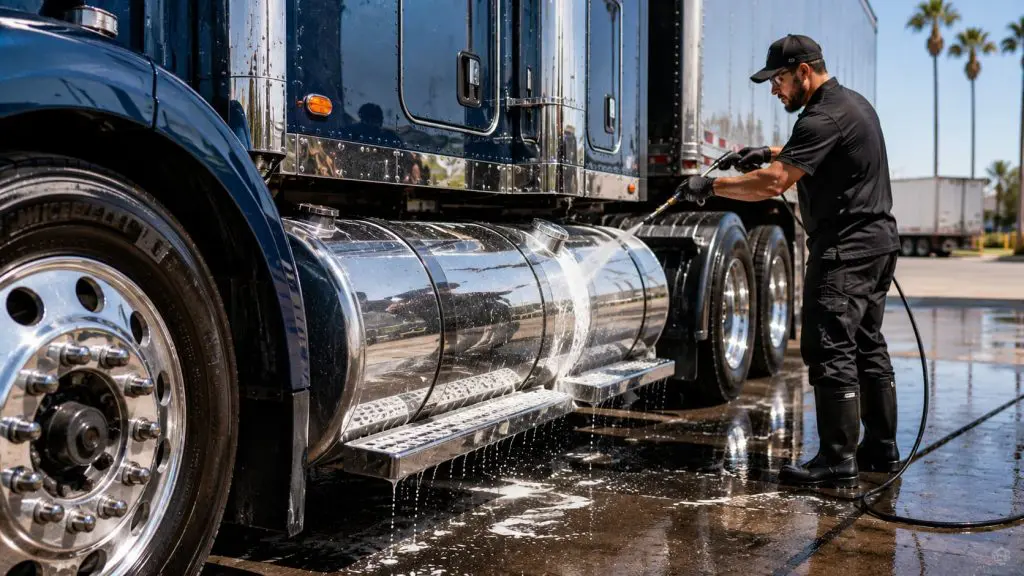
If you take a stroll through any major truck stop staging lot across the American West, one thing becomes instantly clear: brightwork is the soul of a Class 8 rig. From massive 150-gallon fuel tanks and forged aluminum wheels to polished steps, battery boxes, and vertical exhaust shields, aluminum isn’t just a structural metal on a commercial truck. It’s the primary visual hallmark of a proud owner-operator and a well-managed fleet.
When that metal is mirror-shiny, the entire rig looks immaculate, powerful, and impeccably maintained. But aluminum is a finicky, temperamental metal out on the highway. Exposed to extreme weather, chemical de-icers, road film, and relentless UV rays, pristine aluminum quickly loses its luster. Before you know it, those gleaming fuel tanks turn chalky, gray, cloudy, and pitted.
Restoring that metallic mirror isn’t a job for a standard bucket of soapy water and a sponge. It demands a specialized chemical process known as aluminum brightening.
Whether your trucks are hauling freight through the desert heat of Eloy, AZ, traversing the windy mountain passes near Hesperia, or staging loads in the heavy logistics hubs of Fontana, understanding the science and necessity of aluminum brightening is vital for protecting your hard-earned assets.
1. The Chemistry of Dullness: Why Aluminum Oxidizes
To understand why aluminum brightening is so important, you first have to understand what happens to raw metal out on American interstates.
Unlike painted steel, which relies on a clear coat for protection, commercial truck aluminum is often raw or semi-polished. Aluminum has a natural chemical defense mechanism: when exposed to oxygen, it instantly forms a microscopic layer of aluminum oxide on its surface. While this oxide layer actually seals the underlying metal from rusting away like iron, it comes with a major cosmetic drawback—it turns the surface flat, dull, and chalky gray.
Combine that natural oxidation with high-speed road exposure, and the damage accelerates rapidly:
- Road Brines and De-Icers: Magnesium chloride and liquid calcium chloride sprayed on winter highways are extremely aggressive. They eat into raw aluminum, creating unsightly white spots and deep surface pitting.
- Industrial Fallout and Diesel Soot: Hot diesel exhaust kicked out near your fuel tanks fuses organic carbons directly onto the metal surface.
- Micro-Abrasive Sand and Dust: Running routes through desert lanes like Barstow or Thousand Palms subjects your brightwork to thousands of microscopic dust impacts an hour, scouring the metal and dulling the finish.
Once aluminum reaches a certain stage of oxidation, standard soap just slides right over it. You can spray the truck for an hour, but as soon as the water dries, that dull gray oxidation returns instantly.
2. What Exactly Is Aluminum Brightening?
Aluminum brightening is a targeted chemical restoration process designed to strip away the dull layer of aluminum oxide, road film, and mineral scale without harming the raw metal beneath.
It is not the same thing as mechanical high-speed wheel polishing. Mechanical polishing uses physical buffers and abrasive compounds to smooth the metal. Aluminum brightening, on the other hand, is a chemical treatment applied during a wash cycle that dissolves the atmospheric oxidation at a molecular level.
When high-grade brightener solutions are applied by trained technicians during professional truck washing services, the solution reacts chemically with the oxide shell. It breaks the bond holding the crust to the metal, allowing it to be safely rinsed away with high-pressure water. The result? The underlying raw aluminum is exposed, restoring its bright, silvery, satin-like or polished finish.
3. Why Regular Brightening Matters for Your Fleet
Investing in routine aluminum brightening isn’t just about vanity or winning trophies at a truck show. It carries major operational and economic benefits for your trucking business:
Preventing Permanent Surface Pitting
Oxidation doesn’t just stop at the surface. If left untreated for months, chemical salts and moisture get trapped beneath the oxide crust. This causes galvanic corrosion and “pitting”—tiny micro-craters that eat into the metal. Once aluminum becomes deeply pitted, no amount of chemical washing or light polishing can restore a smooth surface. Brightening removes those trapped salts before they can ruin your wheels and tanks permanently.
Maximizing Equipment Resale Value
When it’s time to trade in a tractor or sell it on the private market, visual presentation dictates appraisal value. A buyer walking up to a truck with bright, clean fuel tanks, pristine step treads, and gleaming forged wheels immediately perceives the vehicle as well-cared-for. Conversely, cloudy, white-pitted aluminum screams neglect, instantly driving down your trade-in offers by thousands of dollars.
Passing DOT Inspections with Confidence
Safety inspectors and state troopers at weigh stations operate heavily on visual cues. A truck with bright, spotless aluminum components signals a fleet culture that values discipline and proactive maintenance. When your brightwork shines, officers are far less likely to suspect hidden mechanical neglect underneath the frame. To see how specialized exterior maintenance protocols influence compliance, read our guide on Why Trucks Require Different Cleaning Techniques Than Light-Vehicles.
Weight Reduction and Thermal Performance
While it might seem minor, heavy layers of road grime, road tar, and caked mineral scale across multiple wide fuel tanks and double-frame rails can add up to dozens of extra pounds. More importantly, clean aluminum fuel tanks reflect solar heat far better than dark, dirt-caked tanks, helping maintain more consistent fuel temperatures in extreme desert heat.
4. The DIY Risk: Why Chemical Choice Matters
Many independent drivers try to bright-wash their own aluminum using cheap, over-the-counter jugs bought at truck stops. This is where things can go wrong fast.
Traditional low-grade aluminum brighteners rely heavily on unbuffered hydrofluoric acid. If applied incorrectly, in direct sunlight, or left on the metal for a minute too long, hydrofluoric acid will severely “burn” or “whiten” the aluminum. It turns custom polished metal into an ugly, chalk-white mess that requires hours of aggressive mechanical polishing to fix.
Professional facilities use calibrated, buffered acid or non-hydrofluoric acid blends combined with high-grade surfactants. The chemistry is specially formulated to target the oxide layer while protecting the luster of the metal. Furthermore, professional crews know how to immediately follow up an acidic brightener with a high-pH alkaline wash—creating that “scientific snap” that neutralizes the acid completely and leaves a streak-free finish.
Strategic Route Maintenance Across the Southwest
Because aluminum is so sensitive to environmental heat and road chemicals, maintaining your brightwork requires a consistent schedule. You cannot wait until your tanks look like concrete blocks before deciding to clean them.
For fleet supervisors managing transcontinental routes or regional runs across California and Arizona, integrating aluminum care into your regular route stops ensures your equipment stays in peak condition without taking drivers out of route.
If your freight moves through key Southwestern corridors, LS Truck Wash provides specialized aluminum treatment and precision fleet care at primary logistics junctions:
- Fontana & Hesperia: Perfectly located along the major freight corridors feeding the Southern California ports, equipped to safely strip away urban traffic film, diesel soot, and harbor grime.
- Barstow & Thousand Palms: Essential desert stops where baking heat and blowing silica sand dull raw metals. Our brightener treatments safely restore your aluminum without burning the finish under the hot desert sun.
- Eloy, AZ: Situated directly on the busy I-10 shipping lane, giving long-haul drivers a fast, reliable oasis to restore their wheels, tanks, and steps before heading east toward New Mexico and Texas.
To learn how to systematically incorporate brightwork care, soft washes, and chassis cleaning into a seamless operational program for your drivers, check out our operational guide on How to Create an Efficient Fleet Wash Schedule.
Conclusion: Protect the Metal That Drives Your Brand
In the modern transportation industry, your equipment is the rolling face of your company. Dull, oxidized aluminum detracts from your brand image, lowers your trade-in value, and exposes your metal assets to permanent corrosion.
By prioritizing routine, professional aluminum brightening, you protect your structural investment, maintain high resale values, and keep your rig looking like a true king of the highway.
Don’t let road salt and desert dust ruin your brightwork. Experience the power of professional chemical restoration. Pull your rig into an LS Truck Wash location today, and let our expert team bring back the brilliant shine your truck deserves.