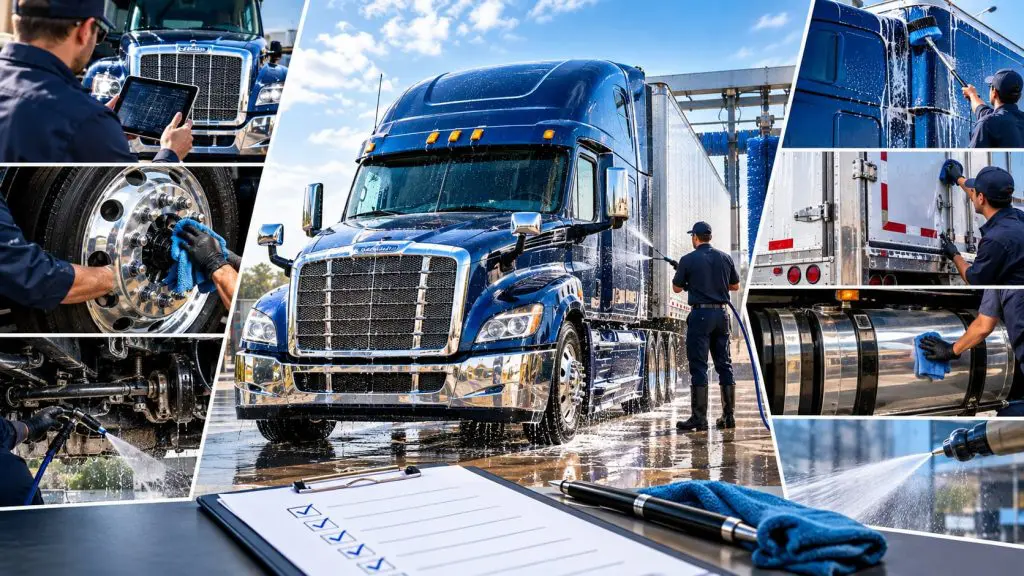
When you pull an 80,000-pound Class 8 tractor-trailer into a commercial wash bay, you are paying for far more than a quick rinse and a pleasant soapy smell. You are investing in asset protection, driver safety, regulatory compliance, and your company’s public reputation.
Yet, too many drivers and fleet managers leave the wash bay only to realize twenty miles down the interstate that the back of the cab is still caked in diesel soot, the inside rims are coated in road film, or the trailer conspicuity tape is still grayed out with highway salt. Worse, an untrained crew using aggressive, uncalibrated pressure can leave you with peeling custom decals, cloudy aluminum fuel tanks, or water forced into sensitive electrical harnesses.
Whether you run a single owner-operator rig or oversee a nationwide fleet, you need a standardized quality control system. Use this comprehensive inspection checklist to ensure your provider of truck washing services delivers the deep, safe, and compliant clean your equipment demands.
Phase 1: Pre-Wash Assessment & Surface Protection
A professional wash should never start with high-pressure spraying. Before water ever touches the truck, a reputable wash team performs a walk-around inspection to identify delicate components, specialized finishes, and problem spots.
- Sensor & ADAS Mapping: Forward-facing collision mitigation radars on the front bumper, lane-departure camera housings on the windshield, and side-mounted blind-spot monitors must be identified so technicians avoid direct, high-pressure blasting at point-blank range.
- Surface Material Isolation: Technicians should distinguish between painted clear coats, polished aluminum, raw galvanized steel, and vinyl graphic wraps. Each surface requires distinct chemical formulations to clean effectively without causing irreversible finish damage.
- Pre-Soak Bug & Tar Treatment: Heavily baked-on insects on the sun visor, chrome grille, mirror caps, and hood should receive an enzyme-based softener to loosen organic matter before high-volume rinsing begins.
Phase 2: Tractor Exterior & Cab Detailing
The tractor cab is your mobile billboard and the visual centerpiece of your rig. A thorough exterior wash must address the aerodynamic zones where high-speed road fallout naturally accumulates:
- Aerodynamic Roof Fairings & Sleeper Extenders: Wind deflectors channel airflow, catching high concentrations of diesel exhaust soot and airborne grime. These hard-to-reach areas must be thoroughly soaped and agitated.
- Back of the Cab & Headache Rack: The space between the sleeper and the trailer bulkhead is a notorious grime trap. Unburned fuel residues, road film, and hydraulic oil mist frequently collect here and require dedicated degreasing.
- Mirror Shells & Windshield Glass: Optical clarity is critical for road safety. Windshields must be completely cleared of road oil film and bug splatters without leaving behind streaks or alkaline residue that could etch the glass over time.
- Door Jambs & Entry Steps: Serrated aluminum steps and grab handles accumulate oily shoe dirt and greasy highway grime that create slip hazards for drivers entering and exiting the cab.
Phase 3: Specialty Brightwork & Polished Aluminum Care
Polished aluminum is one of the quickest materials to show wear, oxidation, and chemical neglect. If an inexperienced crew uses cheap, highly caustic detergents to wash the entire vehicle, your brightwork can cloud over within minutes.
[Standard Caustic Detergents]   ---> Chemical "Whitening" & Permanent Surface Pitting
[Calibrated Neutralized Soaps]  ---> Strips Oxidation & Preserves Mirror Luster
- Dual Fuel Tanks: Tanks must be cleared of diesel drip stains, strap corrosion, and lower-belly road film without leaving white chemical streaks along the sides.
- Forged Wheels & Rims: Brake dust contains microscopic metallic iron filings that bond to aluminum wheel rims. Cleaning must remove brake dust down to the inner barrel, not just the front face.
- Battery Boxes & Tool Storage: Latches, hinges, and exterior boxes should be hand-cleaned to keep road salt from freezing up locking mechanisms.
To understand why custom aluminum requires specialized chemical calibration rather than standard degreasers, explore our guide on The Importance of Aluminum Brightening for Commercial Trucks.
Phase 4: Undercarriage, Running Gear & Frame Rails
The undercarriage takes the brunt of winter road de-icers, muddy work sites, and corrosive highway brines. It is also the area most closely inspected by state troopers during Level I DOT roadside inspections.
- Chassis & Crossmembers: High-volume water flushes must dislodge packed salt, gravel, and dirt caked inside the C-channels of the frame rails.
- Fifth Wheel Assembly: While the fifth wheel top plate requires heavy grease for smooth trailer articulation, surrounding frame aprons, slider tracks, and release pins must be cleared of hardened, dirt-laden grease cakes.
- Brake Hardware & Slack Adjusters: Salt and road grit accelerate mechanical wear on brake return springs, camshafts, and air chambers. Washing must dislodge abrasive debris without driving water past sealed rubber diaphragms.
- Suspension Air Bags & Leaf Springs: Mud build-up around air springs can cause premature rubber chafing, while dried grime on leaf springs can mask stress fractures from pre-trip visual checks.
Phase 5: Trailer Exterior & Cargo Space
Whether pulling a dry van, flatbed, auto carrier, or temperature-controlled unit, the trailer represents 53 feet of brand exposure that must remain clean and compliant.
- Conspicuity Tape & Lighting Modules: Federal safety standards require clean, reflective conspicuity tape along trailer sides and rear skirts. Dirt-caked reflective markings and dim LED clearance lamps represent immediate roadside safety citations.
- Rear Swing Doors & Lock Rod Hardware: Trailer rear doors accumulate heavy vortex-drag road film. Door hinges, cam locks, and rubber weather stripping must be washed clean to ensure smooth opening and sealing.
- Sanitary Washouts (Reefer Units): Food-grade refrigerated transport demands interior high-temperature sanitization using EPA-registered detergents to eliminate biofilms, blood residues, and cross-contamination risks before loading fresh perishables.
Phase 6: The Final Spot-Free Inspection
The final rinse determines how the truck will look once it rolls out of the bay and dries under the afternoon sun.
- Reverse Osmosis (RO) Spot-Free Rinse: Municipal tap water is rich in dissolved minerals (calcium, silica, magnesium). If wash water is allowed to air dry, these minerals leave behind chalky white water rings. A final pass with demineralized RO water ensures the entire rig dries with a clear, streak-free shine.
- Visual Walk-Around with the Bay Lead: Before rolling out, inspect the vehicle in good lighting. Confirm that the wheels are clean on both sides, the windshield is clear, the rear bumper is free of road grime, and no soapy chemical streaks remain across the paint.
To understand why heavy commercial equipment requires completely distinct chemical and mechanical wash steps compared to light-duty passenger vehicles, read our comprehensive analysis on Why Trucks Require Different Cleaning Techniques Than Light-Vehicles.
Summary Quality-Control Checklist
| Inspection Zone | Key Checklist Verification | Pass / Fail |
| Front Profile | Grille, bumper, and visor cleared of baked bugs; camera lenses intact | [ ] |
| Cab Body | Sleeper panels, roof fairings, and headache racks free of diesel soot | [ ] |
| Brightwork | Aluminum tanks and wheel rims restored without acid whitening | [ ] |
| Undercarriage | Frame rail channels, suspension springs, and brake assemblies flushed clean | [ ] |
| Trailer & DOT | Reflective conspicuity tape clear; lights bright; door seals washed | [ ] |
| Final Finish | Spot-free demineralized rinse applied; zero chalky mineral rings | [ ] |
Strategic Fleet Locations Along Southwestern Lanes
A detailed wash checklist is only valuable if your drivers can access facilities equipped with high-capacity equipment and trained technicians right along their active freight corridors.
If your company operates across California and Arizona, LS Truck Wash provides specialized infrastructure built specifically around this quality standard:
- Fontana & Hesperia: Located right along the major freight lanes serving the Inland Empire logistics hubs and Southern California ports, equipped to quickly strip away heavy industrial soot and urban film.
- Barstow & Thousand Palms: Vital desert transit points to wash off micro-abrasive desert sand, mineral dust, and heat-fused bugs before they damage delicate clear coats.
- Eloy, AZ: Strategically placed on the busy I-10 shipping route, offering transcontinental carriers an operational stop to wash off chemical salts and prep rigs for clean scale passes.
For fleet supervisors looking to integrate these stops into a predictable maintenance routine without sacrificing driver road time, see our planning guide on How to Create an Efficient Fleet Wash Schedule.
Demand Quality Every Time You Wash
A commercial rig is too valuable an asset to settle for an incomplete, rushed, or damaging wash. Using a structured inspection checklist ensures you get the full value of your maintenance investment—protecting your paint, extending component life, and presenting a sharp corporate image on the road.
Never settle for half-cleaned frames or clouded aluminum. Pull your equipment into an LS Truck Wash bay today, and experience what a complete, professional commercial wash should be.