
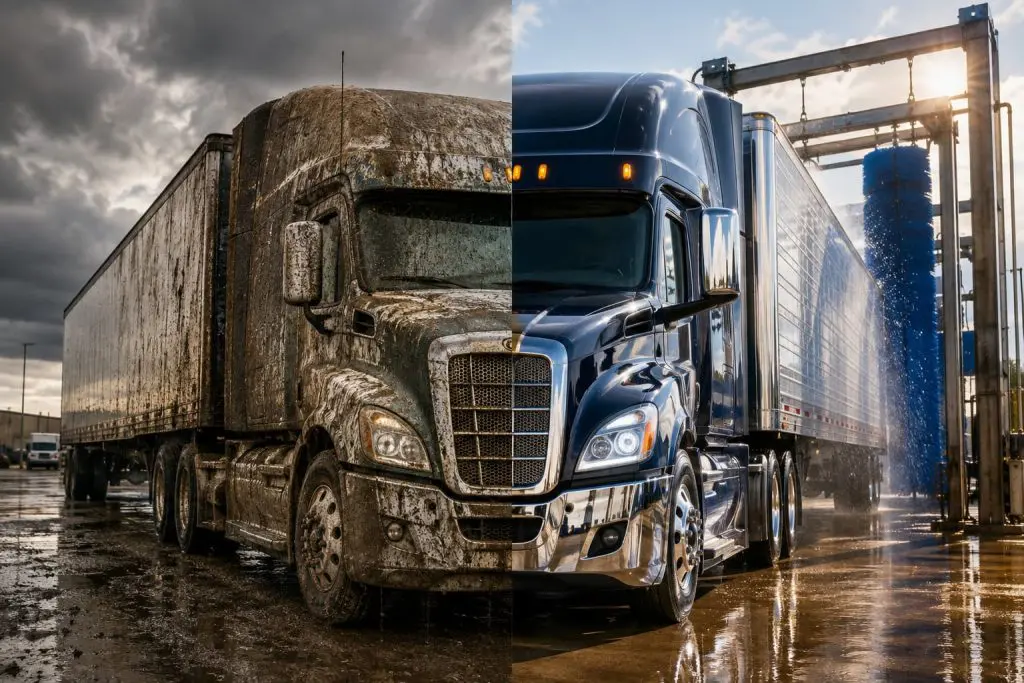
When fleet managers and independent owner-operators review their monthly operational balance sheets, exterior cleaning often ends up filed away in the “cosmetic” or “optional” column. Facing fluctuating fuel prices, soaring insurance premiums, driver wage pressures, and supply chain demands, it is tempting to view a wash bay visit as an expense that can be pushed off until next week—or next month.
Treating exterior wash care as a cosmetic luxury is one of the most expensive financial misconceptions in modern trucking.
The dirt, chemical de-icers, industrial soot, and biological road grime covering a Class 8 tractor and trailer are not inert substances sitting harmlessly on the surface. They form an aggressive chemical layer that steadily degrades clear coats, corrodes brake systems, blinds ADAS sensors, and ruins trade-in values. Skipping regular truck washing services does not save money; it simply defers a modest operational expense into massive maintenance bills, roadside downtime, and regulatory penalties.
Whether your routes run through the heavy port corridors of Fontana or haul freight along the desert corridors near Eloy, AZ, calculating the hidden financial toll of deferred washing is vital for protecting your bottom line.
1. Structural Corrosion and Premature Component Failure
Corrosion is the silent profit killer in commercial transportation. American highways are treated with liquid magnesium chloride, calcium chloride, and salt brines to clear winter snow and bind summertime dust. When vehicles drive over these treated lanes, high-speed tire spray atomizes these aggressive chemical salts, forcing them into every frame cavity, wiring harness, and air valve on the chassis.
- Galvanic and Crevice Corrosion: Chemical salts trapped inside dark, unwashed undercarriage crevices hold onto ambient moisture. This constant dampness creates an electrolyte bath that accelerates galvanic corrosion between dissimilar metals (such as steel chassis bolts mating with aluminum brackets).
- Brake Assembly Seizures: Caliper slide pins, slack adjusters, and S-cams caked in dried road slurry experience premature mechanical binding. A seized slack adjuster or dragging brake shoe ruins fuel efficiency and can take a truck out of service during a roadside check.
- Electrical System Ghost Faults: Modern Class 8 trucks use thousands of feet of multiplex wiring. When salty moisture sits on connectors, it creeps past aging weather seals, creating corroded pins and intermittent sensor codes that take hours of diagnostic shop labor to isolate.
Investing in routine undercarriage and chassis washes neutralizes these acidic compounds before they eat through your hardware.
2. The Direct Drag on Fuel Efficiency and Aerodynamics
Truck manufacturers spend millions of dollars in wind tunnels sculpting aerodynamic fairings, mirror covers, and cab corners to slice through the air with minimal resistance. When a rig goes unwashed for weeks, that calculated aerodynamic profile slowly deteriorates.
- Surface Skin Friction: A heavy, baked-on layer of road film, dead insects, and dried mud changes a smooth clear coat into a rough, sandpaper-like surface. This micro-texture creates turbulent boundary layer air drag across the tractor and trailer skin.
- Dead Weight Accumulation: On heavy vocational equipment, dump trucks, or reefers running agricultural routes, caked mud and undercarriage slurry can add several hundred pounds of dead, non-revenue weight to the vehicle.
Every extra pound carried and every point of aerodynamic drag burns extra diesel. Over a fleet covering millions of cumulative miles annually, even a 1% to 2% hit to fuel economy translates directly into thousands of dollars in lost operational profit.
3. Skyrocketing CSA Scores and Roadside Inspection Fines
Commercial vehicle safety enforcement officers at weigh stations operate under tight time constraints. Troopers must quickly decide which rigs to wave through and which units to direct into the inspection bays for a Level I or Level II DOT inspection.
A tractor caked in road film, dirty wheel hubs, and oily frame rails sends an immediate psychological message: maintenance neglect. Troopers know that an operation that ignores basic exterior hygiene is far more likely to overlook chafed air lines, worn brake pads, and leaking wheel seals.
Beyond general scrutiny, dirt directly causes preventable, low-hanging violations:
- Obscured USDOT numbers, VIN plates, and company markings.
- Dimmed clearance lights, turn signals, and tail lamps covered in highway film.
- Dirt-caked reflective conspicuity tape that fails night visibility standards.
Every minor point ding on your Compliance, Safety, Accountability (CSA) record increases your risk profiling, pushes insurance underwriters to raise fleet premiums, and damages relationships with high-paying freight brokers.
4. Permanent Metal Etching and Massive Resale Depreciation
A commercial tractor-trailer is a major depreciating asset, but the slope of that depreciation curve is largely determined by physical condition. When trading in equipment or selling on the secondary market, buyers immediately inspect the paint, frame rails, and brightwork.
- Clear Coat Oxidation: Road fallout and diesel soot contain acidic compounds that burn into clear coats under intense UV exposure, causing clear coat peeling and chalky paint degradation.
- Aluminum Pitting: Raw forged aluminum fuel tanks and wheel rims subjected to highway salts quickly lose their shine, turning cloudy, gray, and deeply pitted. Once aluminum reaches advanced pitting, it cannot be recovered with basic washing; it demands costly mechanical buffing or complete replacement. You can learn more about protecting these sensitive components in our guide on The Importance of Aluminum Brightening for Commercial Trucks.
- Driver Health and Turnover: Interior and exterior truck condition correlates directly with driver retention. Drivers spending 60+ hours a week in a vehicle take greater pride in their work when operating clean equipment, reducing turnover costs in an industry where recruiting a single driver costs thousands of dollars.
5. Cost Comparison: Preventative Washing vs. Neglect
| Cost Driver | Regular Professional Washing | Deferred / Neglected Washing |
| Chassis & Underbody | Salt neutralized; clean seals & pins | Premature rust; seized adjusters; wiring shorts |
| Fuel Economy | Clean aerodynamics; zero dead mud weight | 1–2% drag penalty; added dead weight |
| DOT Inspections | Quick pass-through; high conspicuity | Targeted inspection; minor violation points |
| Brightwork & Paint | Clear coat sealed; aluminum protected | Chalked clear coat; deeply pitted fuel tanks |
| Resale Asset Value | Maximized trade-in and appraisal worth | Deep valuation discounts on trade-in day |
Strategic Regional Care Across Key Freight Corridors
Minimizing fleet maintenance costs requires a wash strategy that integrates seamlessly into regular transit lanes without forcing drivers into out-of-route miles.
If your routes move across California and Arizona, LS Truck Wash delivers calibrated, high-efficiency commercial washes across critical Southwestern corridors:
- Fontana & Hesperia: Positioned along the primary freight arteries surrounding the Los Angeles logistics basin, designed to strip away port soot and urban traffic film quickly.
- Barstow & Thousand Palms: Essential desert junctions to wash off abrasive dust, mineral scale, and heat-baked insects before they fuse to the finish.
- Eloy, AZ: Located along the I-10 shipping lane, giving long-haul carriers an operational stop to clear chemical brines and maintain clean safety markings before interstate scale checks.
To establish a scalable cleaning program across multiple tractors and trailers, explore our operational framework on How to Create an Efficient Fleet Wash Schedule.
Prioritize Equipment Hygiene as Preventative Maintenance
Skipping truck washes does not save capital; it transfers a small, predictable expense into costly mechanical repairs, lower resale values, and higher compliance risks. Clean trucks run more efficiently, pass roadside inspections faster, and project the brand standard your business works hard to build.
Protect your investments and keep your fleet running at peak performance. Pull into an LS Truck Wash location today to experience the long-term value of professional, chemistry-driven vehicle care.