
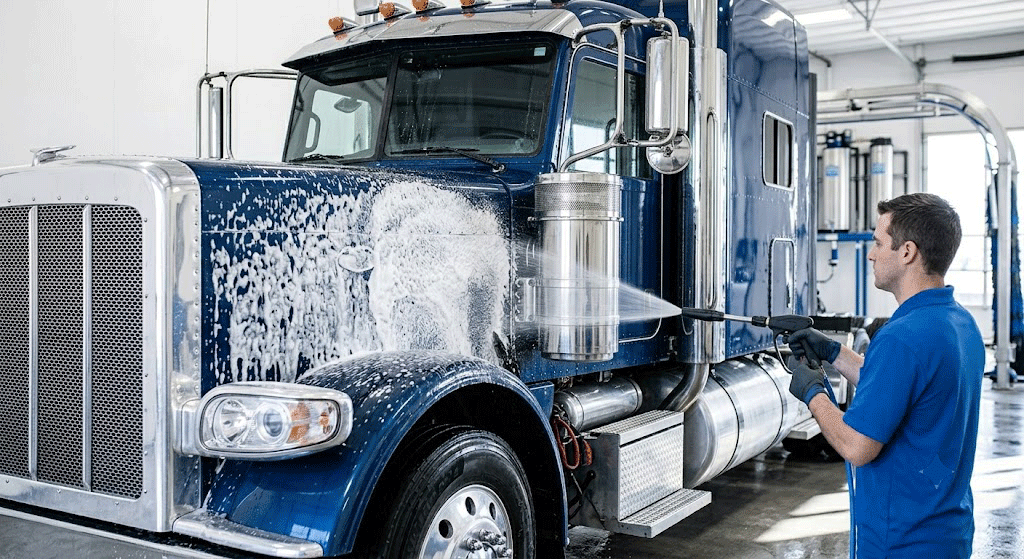
If you walk into any truck stop driver lounge from the East Coast to the Pacific, you’ll hear the same complaint over and over: “The wash bay ripped off my custom graphics,” or “Ever since that high-pressure washout, my reefer’s electrical harness has been throwing codes.” For decades, the American trucking industry relied on a simple formula to clear road grime: blast it with as much water pressure as humanly possible. If the dirt didn’t budge, pump the pressure up to 3,500 PSI and get closer. But modern commercial trucks aren’t just blocks of steel anymore. With delicate clear coats, intricate vinyl wraps, and advanced driver-assist sensors mounted right on the body panels, brute force isn’t just outdated—it’s a massive financial risk.
Smart owner-operators and fleet managers across the USA are moving away from traditional high-pressure blasting. Instead, they are turning to a smarter, chemistry-driven solution: Soft Wash Truck Cleaning.
Whether you’re hauling through the grueling heat of Eloy, AZ or staging a load in the busy industrial corridors of Fontana, choosing a soft wash method through professional truck washing services is the single best way to protect your equipment while keeping your fleet looking pristine.
1. What Exactly is Soft Wash Truck Cleaning?
A lot of guys mistake “soft washing” for a weak rinse. They think if they don’t see a tech wrestling a high-pressure wand that looks like it’s trying to fly out of his hands, the truck isn’t getting clean.
In reality, soft washing is a highly specialized method that relies on advanced chemistry instead of raw physical force. The water pressure used in a soft wash is typically under 500 PSI—roughly the same force as a heavy downpour or a high-end garden hose nozzle.
The magic happens in the pre-soak. Instead of trying to mechanically blast road film off the aluminum, a soft wash uses a low-pressure application of premium, eco-friendly detergents and surfactants. These chemicals penetrate the dirt, break its static bond to the paint, and dissolve oils on contact. Once the chemistry has done the hard work, a low-pressure rinse washes the grime away completely, leaving a streak-free shine without ever stressing the truck’s surfaces.
2. Why High Pressure is a Liability for Modern Rigs
To understand why soft washing is taking over American fleet maintenance, you have to look at how destructive high-pressure washing can be to modern equipment:
Water Intrusion in Electrical Harnesses
Modern Class 8 trucks are packed with electronic control modules, sensors, and wiring harnesses. While these components are weather-resistant, they are not designed to withstand a direct hit from a 3,000 PSI pressure washer. High pressure easily bypasses rubber weather stripping and forces water into electrical connectors. The result? Ghost codes on your dash, corroded pins, and unexpected downtime that kills your profits.
Destruction of Vinyl Graphics and Wraps
Fleet branding is expensive. Whether you have simple door decals or a full custom vinyl wrap, high-pressure water streams can easily catch the edge of a graphic. Once the water gets under the adhesive, it tears the vinyl right off the metal. Soft washing cleans over and around decals safely, ensuring your company logo stays intact.
Micro-Abrasion and Paint Degradation
When a tech uses high pressure to clean a dirty truck, they are essentially shooting a mixture of water and abrasive road grit directly at the paint. That grit acts like liquid sandpaper, carving microscopic swirls and scratches into the clear coat. Over time, your paint loses its shine, turns chalky, and becomes porous—making it even easier for future road film to stick.
3. The Hidden Benefits of Soft Wash Chemistry
Because soft washing relies on specialized detergents rather than force, it delivers a level of cleanliness that traditional pressure washers simply can’t match.
Total Coverage, Zero “Shadowing”
High-pressure streams are directional; they only clean exactly where the nozzle is pointed. If a tech misses an angle behind a fuel tank or around the rivets of a trailer, that dirt stays put. Because soft wash detergents are applied as a thick, clinging foam, they flow into every single nook, cranny, and recessed area. The soap goes everywhere water can, ensuring a 100% clean across the entire asset. This comprehensive approach is a major reason Why Trucks Require Different Cleaning Techniques Than Light-Vehicles.
Neutralizing Road Salt and Brines
If you run routes through the winter snow belts or coastal regions, your truck is constantly exposed to aggressive chemical de-icers like magnesium chloride. High-pressure water can actually drive these corrosive salts deeper into your frame rails and brake components. Soft wash solutions, however, are formulated to chemically neutralize these acids, breaking them down so they rinse away completely. This is especially vital for protecting your aluminum trim and fuel tanks from pitting.
4. Keeping Your Maintenance on Schedule Safely
For fleet managers supervising multiple units across the Southwest, protecting asset longevity while maintaining a strict timeline is a delicate balancing act. You need your rigs clean to pass DOT inspections, but you can’t afford the maintenance delays caused by damaged graphics or water-logged sensors.
Implementing a soft-wash protocol keeps your fleet consistently clean without the wear and tear of daily or weekly high-pressure blasting. It speeds up turnaround times in the wash bay because the chemistry does the heavy lifting, getting your drivers back on the highway where they belong. If you’re looking to streamline your company’s washing operations, check out our professional breakdown on How to Create an Efficient Fleet Wash Schedule.
Strategic Logistics: Finding the Right Wash Along Your Route
A professional soft wash requires a level of chemical expertise and equipment calibration that you won’t find at a generic truck stop wash-out. True fleet care demands dedicated facilities situated along the major freight lanes of the Southwest.
If your drivers are navigating the key corridors of California and Arizona, LS Truck Wash provides high-tier, chemistry-driven care at primary transit hubs:
- Fontana & Hesperia: Located perfectly along the heavily traveled freight corridors surrounding the Los Angeles basin, ready to dissolve thick urban soot and port grime safely.
- Barstow & Thousand Palms: Ideal desert stops to melt away baking dust, heat-fused insects, and micro-abrasive sand without scratching your custom clear coat.
- Eloy, AZ: Positioned directly on the I-10 corridor, offering a critical oasis to neutralize road film and restore your fleet’s professional appearance before heading east.
Conclusion: Work Smarter, Not Harder
The days of relying on raw water pressure to clean a commercial rig are over. Modern fleet maintenance requires a modern approach—one that respects the sophisticated engineering of today’s trucks. By choosing a soft wash system, you are protecting your paint, safeguarding your electronics, preserving your corporate branding, and reducing unnecessary maintenance costs.
Don’t let brute force compromise your fleet’s most valuable assets. Switch to a washing strategy that uses science instead of sweat to deliver a deeper, safer clean.
Ready to see the soft wash difference for yourself? Pull into an LS Truck Wash location today and give your trucks the premium, touchless care they deserve. We’ll get you back on the road faster, cleaner, and fully protected for the long haul.