For an owner-operator or a fleet manager in the USA, a truck is not just a mode of transportation—it is a mobile place of business and a high-value industrial asset. While a light-duty vehicle can get by with a simple soap-and-water scrub, a Class 8 semi-truck operates under entirely different physical and mechanical stresses.
Relying on “general” vehicle cleaning methods for a heavy-duty rig is a recipe for premature corrosion, failed DOT inspections, and mechanical downtime. Here is why specialized truck washing services are a non-negotiable part of commercial fleet maintenance.
1. Industrial-Scale Degreasing vs. Surface Dusting
The most significant difference between trucks and light vehicles is the presence of heavy-duty lubricants. A semi-truck’s fifth wheel, chassis, and axle housings are coated in thick, specialized grease designed to withstand thousands of pounds of pressure.
Standard vehicle soaps are formulated to remove dust and pollen. They lack the chemical strength to break down industrial grease. When these lubricants aren’t properly managed with high-alkaline degreasers, they trap grit and road debris, creating an abrasive paste that wears down moving parts. Professional truck washing involves targeted degreasing that protects the mechanical integrity of the tractor.
2. Chemical Neutralization of Road Brine and Magnesium Chloride
Logistics routes across the USA, especially through the Rust Belt and mountain passes, expose trucks to aggressive chemical de-icers. Magnesium chloride and liquid brine are far more corrosive than traditional rock salt.
Unlike light vehicles that mostly stay on paved city roads, trucks are constantly bombarded by these chemicals at high speeds, forcing the brine into the deep recesses of the frame and wiring harnesses. Specialized cleaning requires a two-step process to chemically neutralize these salts. Failing to do so leads to “white rust” on aluminum and rapid oxidation of steel components. For more on protecting your rig during the winter months, see Protecting Your Truck from Road Salt Damage.
3. Aluminum Oxidation and Acid Brightening
While most light vehicles use painted plastic or steel trim, a semi-truck is often a showcase of raw and polished aluminum. Fuel tanks, wheels, and trailers are susceptible to “milking” or oxidation, which turns the metal dull and grey.
Traditional car washes do not use the acidic brighteners required to strip oxidation from aluminum. Professional truck washing services utilize a carefully balanced acid-etching step followed by an alkaline wash to “brighten” the metal back to a mirror finish. This isn’t just about vanity; it prevents the pitting that can lead to structural weakness in aluminum trailers.
4. High-Volume Water Requirements and Undercarriage Blasting
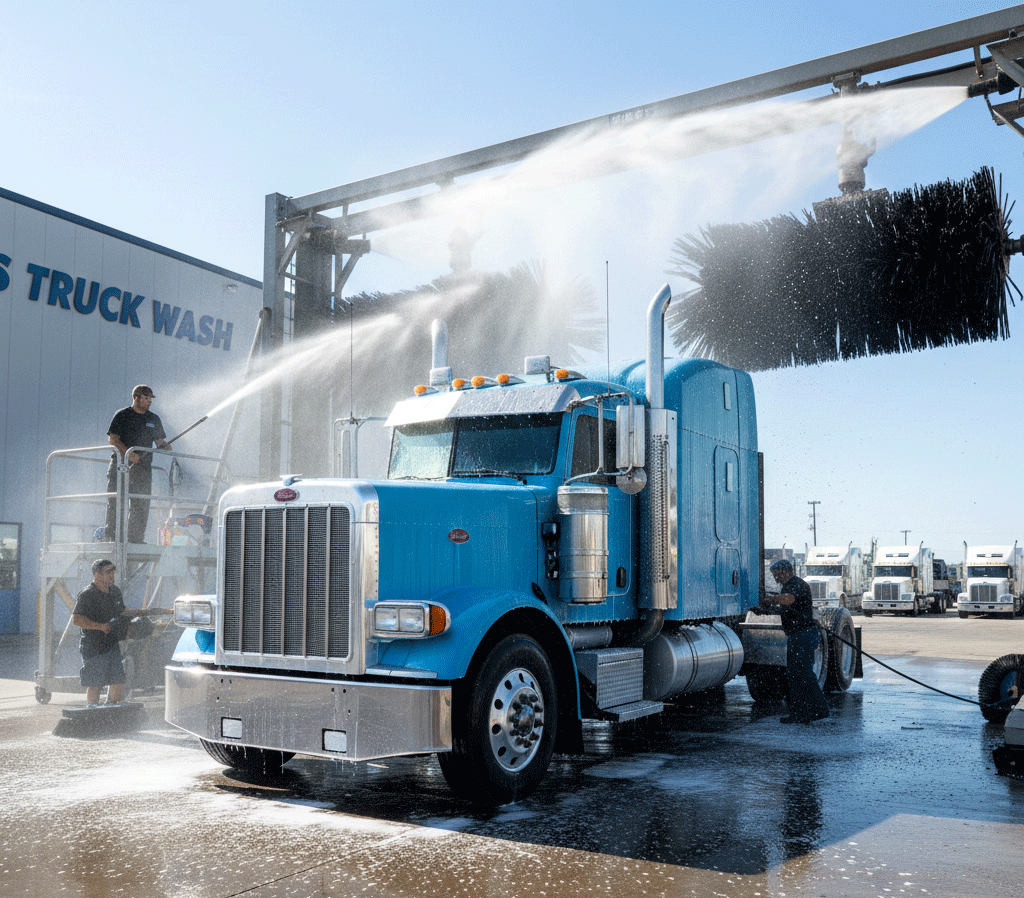
A standard car wash uses a fraction of the water volume required for a semi-truck. Because of the massive surface area and the sheer volume of mud and road grime trapped in the wheel wells and undercarriage, trucks require high-flow systems.
Low-volume sprays used for light vehicles often just “move the dirt around” on a truck rather than flushing it away. High-pressure undercarriage blasters are essential for removing “road film”—a thin, oily layer of exhaust soot and tire rubber that clings to the truck’s belly and interferes with heat dissipation from the engine and transmission.
5. Cleaning for DOT Inspection Readiness
One of the most critical reasons for specialized truck cleaning is the Commercial Vehicle Safety Alliance (CVSA) inspections. A DOT inspector is far more likely to scrutinize a dirty, greasy rig than a clean one.
General cleaning ignores the areas inspectors look at most:
- Brake Components: Dust and grease buildup can hide cracks in brake drums or shoes.
- Air Lines: Grime can mask dry rot or leaks in air hoses.
- Frame Rails: Dirt often hides stress fractures in the chassis.
Specialized truck washing ensures these areas are visible, allowing for a smoother inspection process and higher safety scores. To understand how cleanliness impacts your business operations, read The Importance of Fleet Pressure Washing for Business Growth.
6. EPA Compliance and Industrial Wastewater
In the USA, washing a heavy-duty truck creates “industrial wastewater.” Because the runoff contains diesel residues, heavy metals, and high concentrations of oils, it cannot be allowed to enter the groundwater.
Light-vehicle washes are rarely equipped to handle the heavy silt and oil separation required for truck runoff. Professional facilities utilize oil-water separators and sludge traps to remain compliant with EPA standards. By choosing a dedicated truck wash, you ensure your company isn’t liable for environmental violations.
7. The Complexity of Trailer Interiors
Unlike a light vehicle, the “cargo area” of a truck—the trailer—often requires its own specific cleaning technique. Whether it is a “reefer” (refrigerated trailer) requiring a food-grade washout or a dry van needing debris removal, the interior is as important as the exterior.
Professional services offer specialized trailer washouts that sanitize the interior, ensuring you meet the requirements for your next haul. If you’re deciding on the best maintenance schedule for these tasks, check out our guide on How Often Should You Wash Your Semi-Truck?.
Conclusion
A semi-truck is an investment in your livelihood. Treating it like a standard vehicle during the cleaning process is a disservice to the machine and your bottom line. From managing industrial grease to ensuring DOT compliance, specialized truck washing services are the only way to keep a fleet running efficiently across the USA.
Ready to give your fleet the specialized care it deserves? Visit LS Truck Wash today to learn more about our heavy-duty cleaning solutions.